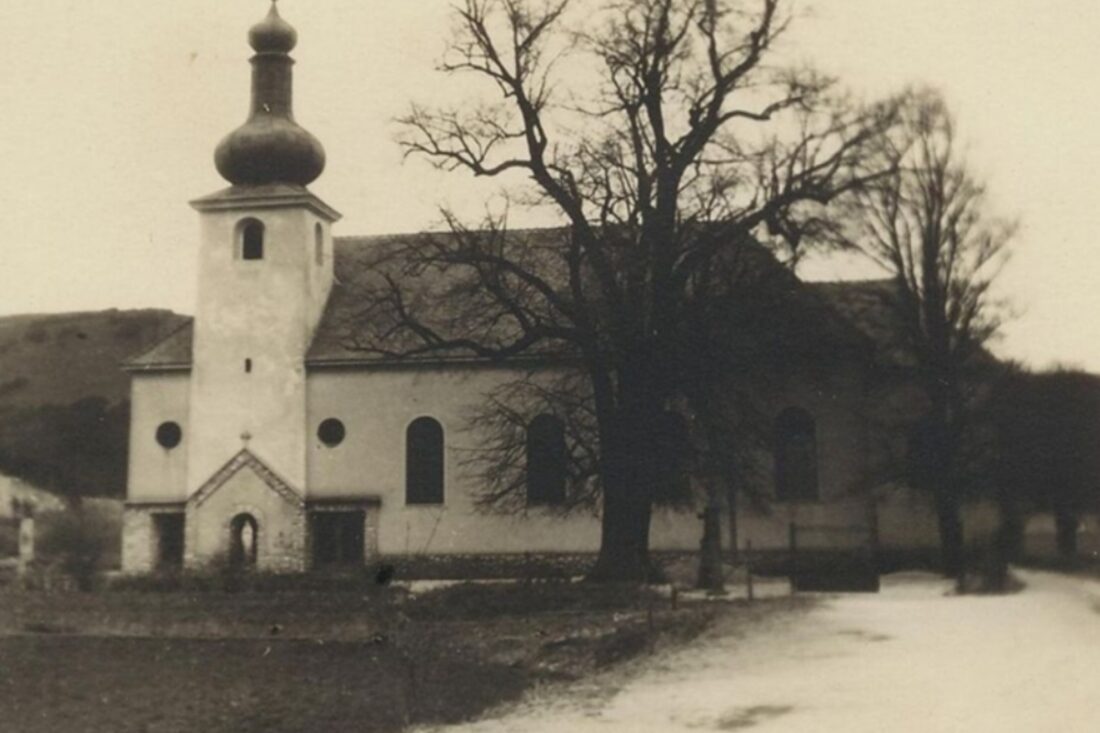


Nová Ves nad Váhom
The first written mention dates back to 1419.
The village has been mentioned since 1419 as Wyfalw. It is documented in 1522 as Nova Villa, in 1773 as Nowa Wes, in 1919 as Váhnovejsa, and in 1929 as Nová Ves nad Váhom. The village belonged to the Beckov estate. At the time of the first written record, the estate was owned by the Stibor of Stiboricz family, who had acquired it from King Sigismund of Luxembourg in 1398. The Stibor family owned the Beckov estate until 1434. From 1437, the Bánffy family became the owners for the second time. In 1590, the Beckov estate was divided into the upper part belonging to the Nádasdy family and the lower part belonging to the Bánffy family. Later, the estate was divided into increasingly smaller parts.
In 1598, it had 44 houses; in 1720, it had vineyards and 36 taxpayers; in 1784, it had 78 houses, 96 families, and 597 inhabitants; in 1828, it had 85 houses and 810 inhabitants; in 1921, it had 625 inhabitants; in 1948, it had 618 inhabitants; and in 1970, it had 180 houses and 668 inhabitants. In 1976, Nová Ves nad Váhom was annexed to the village of Kočovce, and since 1990, the village of Nová Ves nad Váhom has been independent again.
The population was mainly engaged in agriculture. This primarily involved cattle grazing and grain cultivation. They grew a lot of oats and rye, and dried fruit, mushrooms, and wild berries for the winter. They also engaged in wildlife management, beekeeping, and fishing. Some people worked in the forests, preparing timber used as firewood and wood suitable for the repair and maintenance of property. This included ash, black locust (acacia), and linden wood. Favorable natural and climatic conditions were suitable for grape cultivation.
The most advantageous locations were on the eastern slope of Skalka, which is still called Vinohrady (Vineyards) today. Another area, Sady (Orchards), was filled with fruit trees. The cultivation of fruit trees focused mainly on certain varieties that stored well. These were primarily walnuts, winter pears, and apples. The names of our land sections have their own history. The Žálna road gets its name because it led to the cemetery where they buried their loved ones—in our words, the road of sorrow (cesta žiaľu). Radovky is a part of the land where celebrations—rejoicing (radovanie)—took place, whether after a victorious battle or during religious rituals. The Vinohradská road led to the vineyards, from the main road in Lúčne to Skalka.
Source: Municipal Chronicle of Nová Ves nad Váhom.